Real Postgres
Wire-compatible with standard Postgres. Same drivers, extensions, and ORMs you already use.

The serverless database with branching, autoscaling, and your Lakehouse data.
Wire-compatible with standard Postgres. Same drivers, extensions, and ORMs you already use.
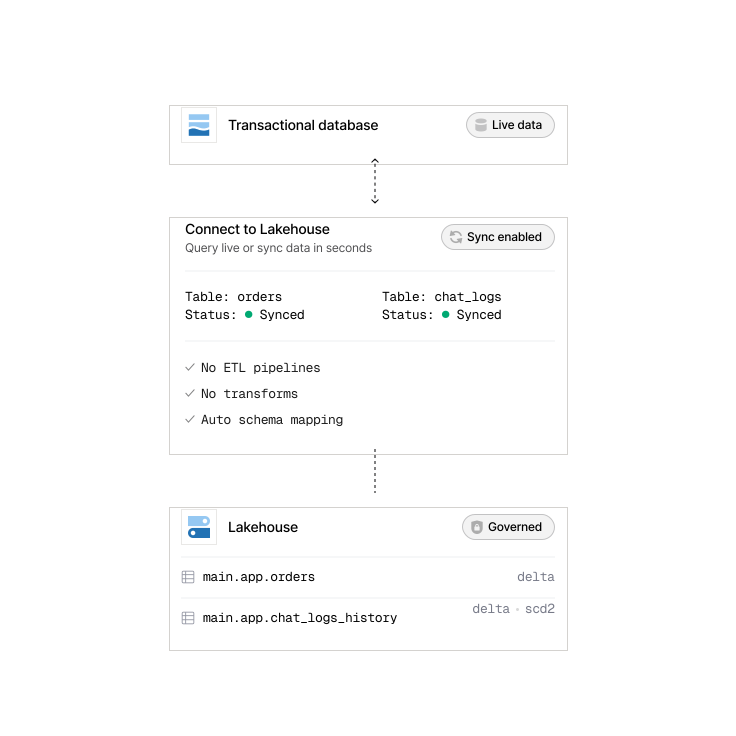
Two-way Postgres-Lakehouse sync. Curated data for Lakebase app reads.
Postgres roles linked to Databricks identities with short-lived secure tokens in apps.
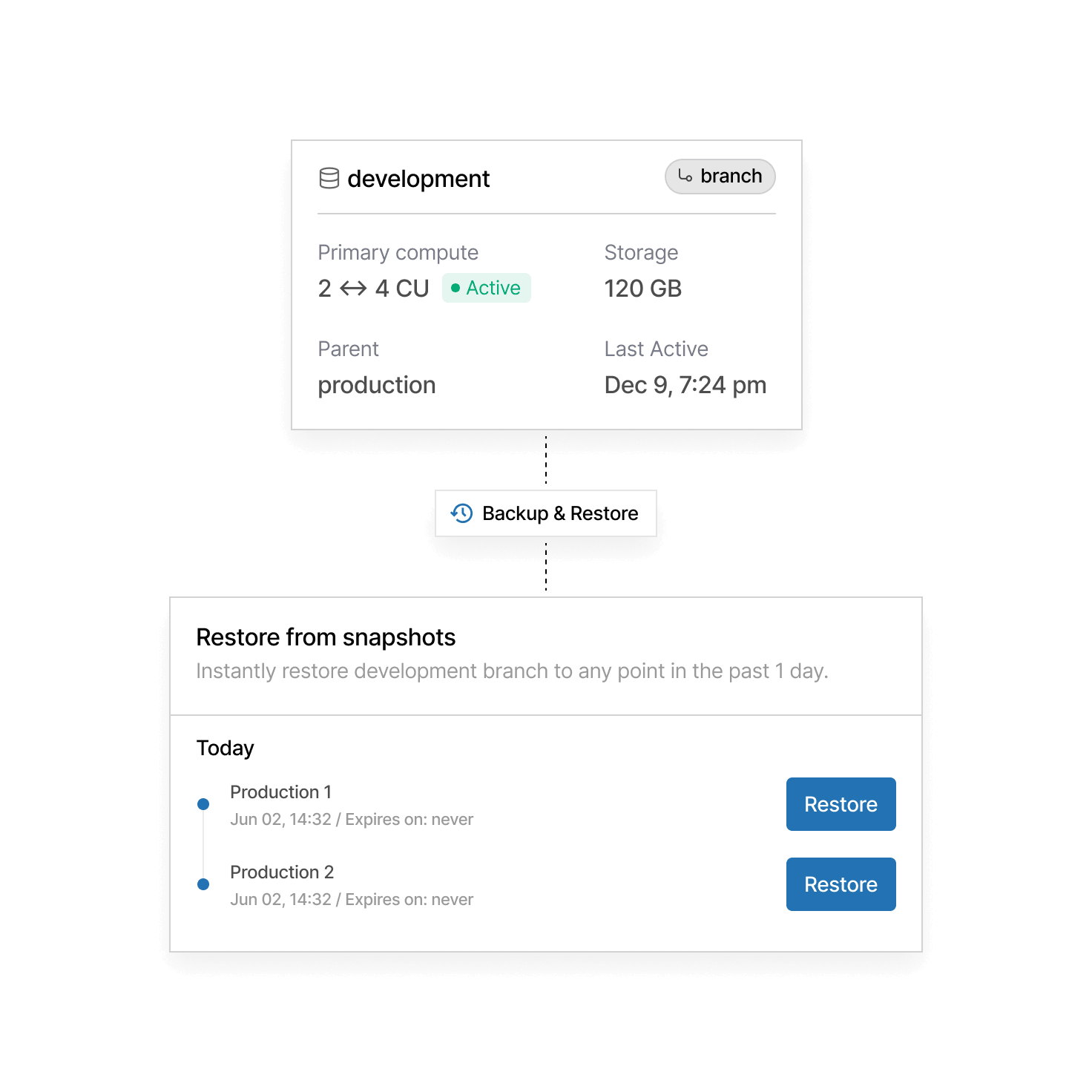
Branches are copy-on-write — they share storage with their parent and only consume new space for the bytes you change.
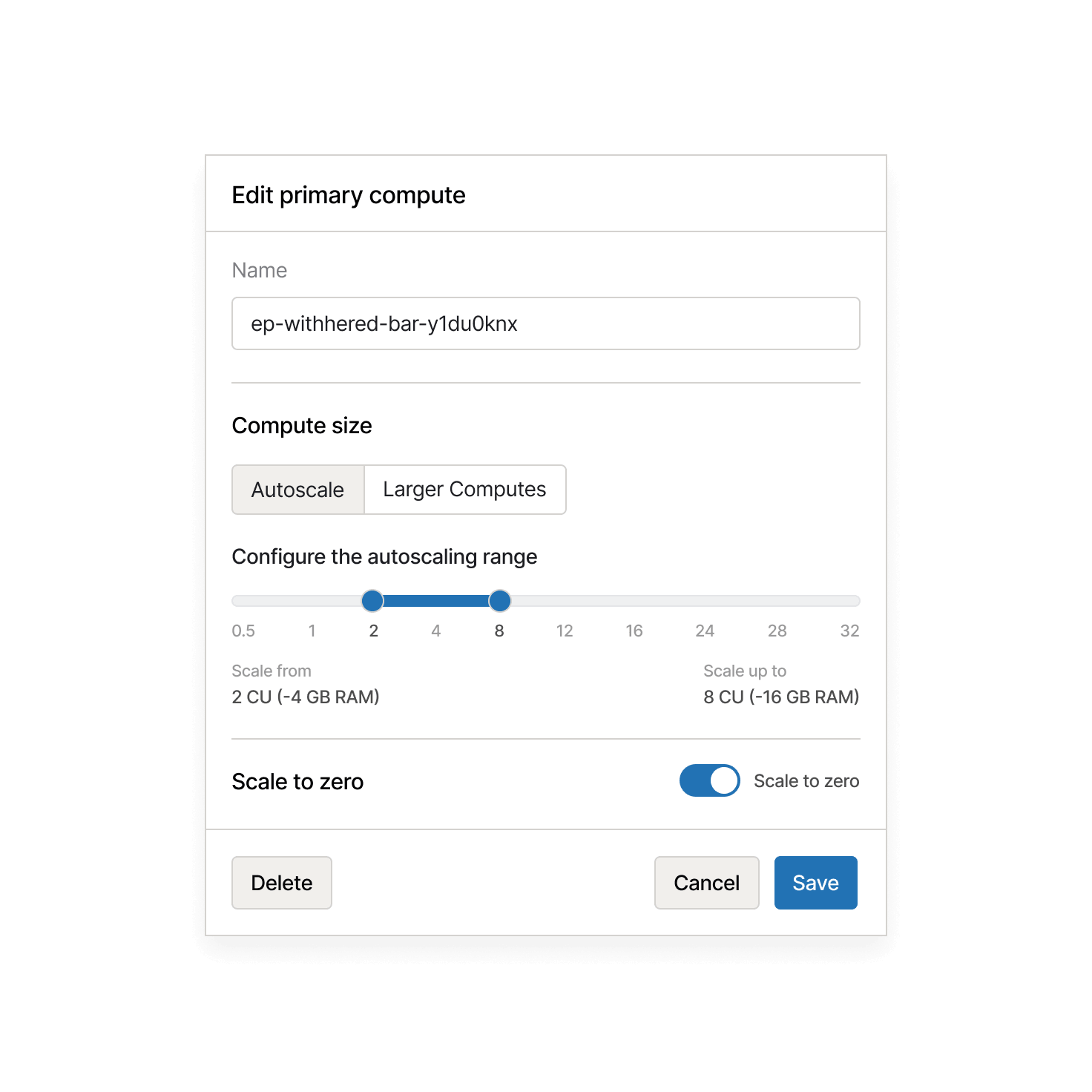
Lakebase tracks load in real time and adjusts capacity within the range you set, with no compute cost while idle.
Both directions are managed by Databricks, no external pipelines, no jobs you have to operate, no glue code to maintain.
Use Lakebase as your app database for users, sessions, and logic, no external Postgres needed.
Store conversations, tool outputs, and state so agents persist across sessions.
Bring Lakehouse data into Postgres for low-latency reads across APIs, ORMs, and apps.
Capture app writes for analytics with no custom pipelines needed.
Validate schema changes and new features in isolated environments before they reach production.
Handle high query volume by distributing reads without changing your application architecture.
Run separate database environments per tenant for independent scaling.
Restore past data states to investigate issues and understand how your system evolved over time.

"At Tibber, empowering customers to take control of their energy consumption requires a flexible data infrastructure. Lakebase's integration with Databricks makes it easy to serve analytical and transactional data, helping us deliver real-time insights to our customers."
Niklas Nordansjo, Data Platform Lead

"Lakebase lets an agentic team quickly self-serve the data they need for their models, whether it's historical claims or real-time transactions, and that's really powerful."
Dragon Sky, Chief Architect

"Lakebase gives us a durable, low-latency store for application state, so our data apps load quickly, refresh seamlessly and even support shared page links between users."
Bobby Muldoon, VP of Engineering
Databricks Developer Hub